In the distant past, how did "customary law" produce order among the people?
As modern people, when we think about "law", we will quickly associate this word with the elements of law, lawyers or courts. If we go back to the traditional history, we will also have some pictures of the traditional "law", such as statutes, litigators and county officials. Generally speaking, these all belong to the category of national law. In fact, in addition, in the distant past, there was a different norm, which was basically formed spontaneously by people and consciously observed. This is customary law.
Customary law has restricted marriage or debts, transactions, contracts and other activities between people for a long historical period. Of course, this is not the whole content of customary law. Therefore, it can also be said that customary law is a legal source in essence and is sometimes regarded as "general belief in law". At home, legal and cultural scholars, including Liang Zhiping, have combed the customary law of ancient China. In the history of world law, how to understand customary law and its modern transformation is also a topic that attracts more attention. For example, in Europe, from the post-Roman era to the beginning of the modern legal era in the 18th century, the two major elements of European law are Roman law and legal custom, and before that, customary law has been very important. Allen Watson, a British jurist, began his discussion of customary law here. Why does an act have normative significance, and then it may become a "law", and the source of customary law may not necessarily be a previous act, because it may also be borrowed from other cultures. The complexity of this is not clear in a few words. When the Chinese version of Allen Watson’s Evolution of Law was published, we excerpted some of its contents.
The following content is excerpted from the book Evolution of Law with the authorization of the Commercial Press. The excerpts are abridged and titled by the editor. See the original book for comments.
Original author |  Allen Watson
The evolution of law,Allen Watson, translated by Yu Chengfeng, Commercial Press, November 2022.
Allen Watson, translated by Yu Chengfeng, Commercial Press, November 2022.Behavior is not just behavior.
Customary law is not a whole. For example, it runs in small wandering groups, temporarily settled tribes and quite small permanent communities, and has been extended to the modern western society with developed economy and a large number of statutes.
Of course, customary law is most prosperous when the law is least theorized. However, the essence of any legal source must have a theoretical basis, even though these foundations are always implicit and never explicitly expressed. In western private law, custom should be treated as law, which must require more than simple usage, even if this habit is universal and popular for a long time. Of course, the problem is that people can’t simply equate "should" with "yes". The fact that people do this does not mean that they should. If they don’t do this, they will be subject to some sanctions. So, what makes behavior not only behavior, but also normative? For any theory or understanding of customary law, the main problem seems to be to determine this additional factor.
The source of Roman law clearly implies that some additional factors are needed, even if the nature of this factor is not clear. Therefore, Epitome Ulpiani wrote, "Habit is the tacit consent of the people, which is deeply rooted after long-term use". Here, the additional factors are expressed by the tautology of "tacit consent" or "tacit agreement". However, what is tacit consent? Of course, this is not the acquiescence to the long-term habit itself, and tacit consent is rooted in the long-term habit. "unwritten law is a habit that has been recognized. As a long-term habit, it has the appearance of a statute with the consent of the user. " This time, the additional factor is represented by "user consent comprobati". Urbian’s ambiguity has not dissipated.
Deep-rooted habits are regarded as a law, not improper; This is the so-called law established by habit. Because the enacted laws are binding on us, not for other reasons, but because they are acceptable to the people, then those things that the people approve without thinking will naturally bind everyone. What does it mean for people to declare their wishes through voting or positive actions and behaviors? Therefore, people quite correctly accept the view that the abolition of laws is not only voted by the people who put forward the laws, but also obtained the tacit consent of all through the abandonment.
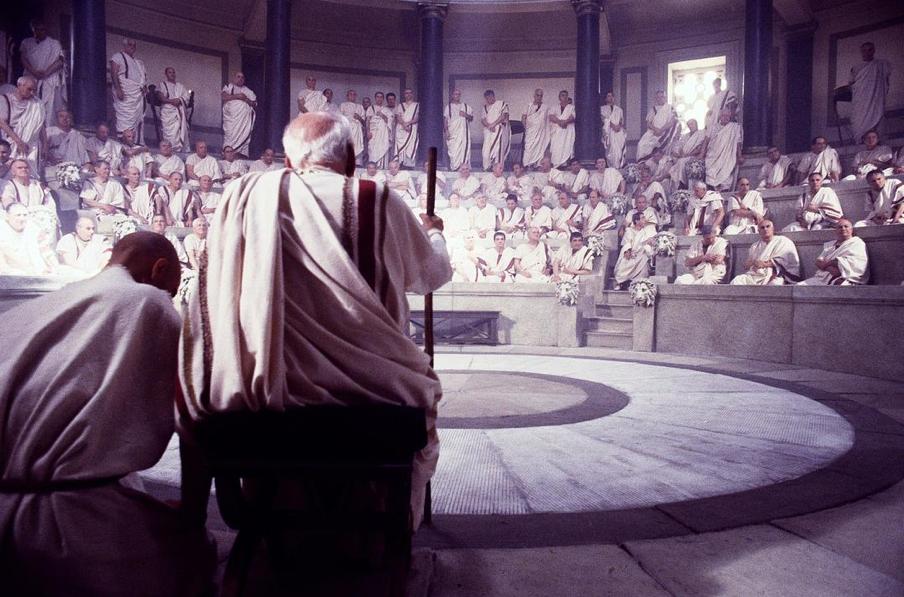
The first season of Rome (2005) stills.
On the law and legal practice, the modern theorist Larenz (K. Larenz) explained:
It can be said that practice must be the expression of a community’s "intention of legal validity" or "general belief of law". As long as one thing is clear, that is, the "intention of legal validity" or "general belief of law" is not just a "psychological fact", but develops or plans its individual behavior according to the judgment of those who share the same law and "the feeling of realizing norms" (the behavior stipulated by law).
From this point of view, habit becomes law, habit is recognized as law, accepted as law, and applied as law by those who share the same law. But suppose that once custom is considered as law and accepted as law, practice will change. The old law is no longer law, but the new practice becomes law? Did this happen? When did it happen? What is the mechanism of change?
There are two different problem situations. First of all, past habits are remembered. Secondly, past habits are forgotten.
Past habits are memorized.
The first situation, which is very important in both theory and real life, is that the law cannot be changed by the opposite practice. As long as the past habits are remembered as laws, it is meaningless to identify new practices in the continuum and intend to be laws. Out-of-date practices must stop becoming laws before different laws can begin to survive from habitual habits; In this theory, there is no mechanism to repeal laws that no longer need approval.

Stills of Tabu: A Story of the South Seas (1931).
People can overcome this difficulty by assuming the abolition theory inherent in customary law: when the practice blessed as law is no longer followed or regarded as law, then it may be claimed to be no longer law. Some people may say that at this stage, but not before, the road to creating new customary law will become clear. The performance of new habits before the invalidation of the old customary law rules is a factor in the invalidation of the old legal rules, but it is not (always following the principle of certainty of law) creating a new legal rule, because the new practice does not follow the "general belief of law". So at the moment of abolition, there was no law at all.
However, in view of this, savigny raised his objection in a particularly sharp form, and he opposed the legal certainty that is usually attributed to the customary framework. Habit should not be based on mistakes, which is clearly stated in Roman literature. However, he said, there is still a contradiction without a solution. Because legal rules should first be produced through habits, but when the initial behavior occurs, the law certainly does not exist. But this first related behavior should be accompanied by legal conviction. Therefore, the first behavior is based on mistakes and should not be included in the generation of customary law. But this also applies to the second behavior, which is now the first behavior, and so on, which can be applied to all subsequent behaviors.
On this basis, according to the accepted legal conviction and customary theory, it is logically impossible for customary behavior to create law. What’s more, when there are already different rules of customary law, any belief that the new behavior conforms to the law is obviously based on the wrong foundation. If custom can’t create a legal rule, it can’t create and replace it with a new legal rule to replace the established rule it abolished.
In fact, if law is believed to be the root of customary law, it is difficult to admit the possibility of abolishing customary law rules, as long as legal rules are always remembered. We are told that customary law is "a general belief in law"; Therefore, it corresponds to what people usually do, and people do it because it is the law. To do the opposite would be deviant, unacceptable and against the law. This should be borne in mind. The key point is not that habitual behavior has not changed, but that under the doctrine of opinio juris, a customary law rule exists and is remembered. It cannot be abandoned by abrogation, and the opposite behavior that violates the rule cannot affect it.
Under the guidance of the theory of legal certainty, there is a deeper and more important logical difficulty in recognizing the possibility of the abolition of customary law. Only when a legal rule is replaced by another legal rule will it become invalid, even if this later rule only applies to the case that the first rule is no longer applicable. However, according to the theory of legal certainty, new rules can only be produced after the old known rules have died out, otherwise it can not be generally considered that new behaviors are in line with the law. So there is no room for abolition.
Past habits have been forgotten.
In the second case, the past habits have been forgotten, and the law has not changed because of the opposite practice. If the customary law is completely forgotten, then in any case, it does not exist and has never existed. There is even no need to introduce the abolition theory here. This will involve the creation of laws that did not exist before.
In addition, the complete forgetting of customary law can only happen under certain circumstances. Either past behavior rarely happens in practice, in which case, people must doubt whether it ever became law-as everyone knows it is a result of law. Or people adopt a very different way of life in this respect-probably the result of immigration-in this case, it should be argued that the new practice is law, not because the new law replaces the old law, but because the law was made for the situation where there was no law before.

Stills of the film "Modern Robinson" (1966).
In any case, if a customary law rule or a supposed customary law rule has been completely forgotten, people can’t admit that the subsequent opposite practice has replaced the pre-existing customary law as law.
Therefore, the doctrine of opinio juris excludes the possibility of changing customary law through subsequent practice, especially if customary law is remembered. If a person wishes, as I believe theorists hope, that customary law should be consistent with what people do, then he hopes that any theory will support the possibility of changing the law through opposite practice. Legal conviction must be abandoned on this basis.
Although savigny is generally regarded as strongly opposing opinio juris within the framework of customary law, he still retains this concept. His solution is based on his general view that law is "the spirit of the people". Law does not come from individual behavior, but from common consciousness. Therefore, individual behavior is not the cause of customary law, but the appearance or sign of pre-existing common legal belief. Therefore, legal conviction must exist before the first relevant act, so it does not depend on legal errors. Thus, legal certainty is preserved, but only for a very different theoretical nature of customary law. The validity of savigny’s views on custom and legal certainty depends on the credibility of his general legal theory. I think that today’s legal philosophers generally reject his theory. Therefore, it will not be discussed further here.
Therefore, if we want to keep the ability to change with the change of practice as an integral part of customary law-even if we want to have the ability to create law in customary behavior-we must give up legal certainty.
Difficulties in understanding customary law
John Austin’s works put forward a different theory to me, which may prove to be more acceptable. According to his point of view, customary law is regarded as a rule of real morality, which comes from the consent of the ruled; However, customary law is regarded as an empirical law for the transformation of moral rules, which is created by the state, either directly by statute or through the adoption of customs by the court. Therefore, customary behavior does not constitute law; Laws are produced through legislation or judicial decisions. Custom becomes law only when it becomes the subject of statute law or judicial judgment.
Before we consider the value of this theory, we should first realize that this proposition is not necessarily correct or must be correct, except for people like Austin who think that the law is ordered by the sovereign. A statute law is a law, even before it is enforced by a court decision. Therefore, if other sources of law, such as custom, exist in possibility, then law may also exist in possibility, without a court decision. We may well say that "it is the binding force of habit that challenges the original hypothesis itself", and "he can’t satisfactorily explain why the rule body he classified as’ real morality’ … lacks the true character of law".
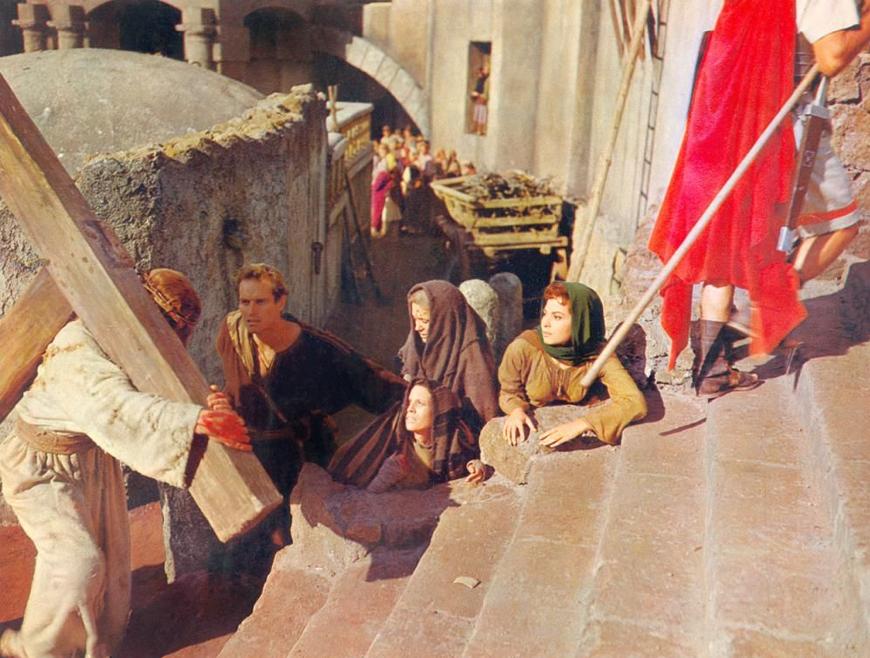
Ben-Hur (1959) stills.
The second point that can be pointed out is that those societies that don’t regard judicial decisions, or even the components of judicial decisions, as binding precedents-as laws-may still regard judgments that establish a habit as binding judgments. On this basis, people may say: judicial precedent is not law; Habit is the law. When the court finds that a custom exists, the judgment itself is not binding, but this pre-existing custom, as a law, has actually been established; Therefore, this judgment (it is not a law) expresses the law.
These two points are unfavorable to Austin, or may be unfavorable, but there are other factors that seem to support his position.
First of all, customary law often does not develop from "the general belief of law". In this case, legal judgment plays a fundamental role in determining what is the rule of customary law. Therefore, for those who live under customary law, if they want to simplify it into written form, it is a standard complaint, because such laws are very difficult to find, know or remember. To give a few examples, the famous Philippe de Beaumanoir gave some reasons in his "Coutumes de Beauvais": "This is my opinion, as well as that of others, that is, all the habits that are currently used have been written down and recorded, so they have been kept unchanged from now on, because memories are easy to fade away. Pierre de Fontaines claimed that the old habits have been seriously damaged, and almost all of them are flawed, partly because judges prefer their own wishes to using habits, partly because they are more persistent in their own opinions than previous generations, and almost entirely because the rich rob the poor, and now the poor rob the rich. He said that this country is almost unaccustomed.
At the beginning of this century, brutus, in his popular works about Andorran customs, also raised the difficulty of understanding customary law. He stressed that in a small place, the number of lawsuits is limited, and the law in the case will fluctuate because of the lack of any systematic collection of judgments. He pointed out that even on contemporary and important issues, there are sometimes disturbing uncertainties. For example, he asked celebrities, magistrates, former magistrates and judges what rights a widow had over her husband’s property, and he got five different answers. Indeed, he often claims to have heard that Andorra is not used to it, but in his view, Andorra is no different from other common law systems. Although there are many major loopholes in the law, it is uncertain whether these loopholes will be filled by Roman law, church law or Catalan law first. The common view was the first, but he tried to prove that, in fact, Catalan law usually prevailed. In my opinion, Andorra’s legal feelings are now inclined to Roman law, although Catalan law may actually prevail.
Customary law may also be borrowed.
Here, let’s do some more discussion.
In a common law system, there is only a very small demand for accurate knowledge of legal rules, because in a small community, many disputes occur between relatives, friends or neighbors, and they have to live together in the future, so they often resort to a less formal method of dispute settlement. A respected friend or relative may be invited to participate in the adjudication, or a recognized adjudication method may appear in a village. In any case, those appointed as judges often make judgments based on their views on what is fair and reasonable, rather than seeking clear legal rules. Formal legal rules may not give the most acceptable solution. However, if problems occur frequently enough and usually lead to the same solution (not necessarily), habits may occur.

Stills of King Oedipus (Edipo re, 1967).
Secondly, customary law often does not come from people’s behavior, but is borrowed from other places. The standard practice, especially in medieval France, where one jurisdiction accepted another system’s law as its residual custom, is an amazing evidence, either from the peripheral systems of Paris or its surrounding customary law as in the common law areas, or from Roman law as in the statutory law areas. This overall inheritance, though complementary, is very telling, not only because it reduces the free choice in individual cases, but also because this peripheral system may have originated from a very different society (in economic and political aspects), such as ancient Rome, or a larger, more commercialized and anonymous center, such as Paris. Even when a local patriot sets out to collect habits unofficially, the same phenomenon will happen. For example, modern scholars believe that up to now, most of Pierre de Fontaine’s "Proposal" is a self-examination of Stigny’s "Compilation of Doctrine" and "Code", although this is a practical work to train a friend’s son to adapt to local customs. This also applies to the contemporary "Livre de jostice et de Plet", which is a work from Orleans, where the origin of regular Roman law and canon law was hidden and wrongly attributed to French aristocrats.
Of course, because these works are unofficial, they cannot create customary law by themselves, but they can and are often treated as evidence of custom by the courts. In this respect, the court’s judgment is particularly relevant: by adopting the rules in the book, the court declares them to be customary regardless of their origin. Similarly, in confusing cases, the court itself often makes judgments according to the customs of other places. Therefore, Philippe de Remy also wants to confirm part of his book that "difficult cases in this county shall be decided by judges in neighboring counties". Here, not only the "foreign" origin of law is borrowed and regarded as the habit of borrowers, but also the borrowed foreign rules are actually embedded in foreign judgments. Similarly, only when the reference rule is included in one or more judgments of the reference person, it has (at least in authority) legal effect.
Therefore, it often happens that the acceptance rule is local customary law. Customary law comes from local judgments, not from previous local behaviors. When this happens, the legal basis is regarded as custom, not judicial precedent.
Original author/Allen Watson
Allen WatsonExcerpt/Luo Dong
Proofreading of Introduction/Liu Jun
Reporting/feedback