Understand four cold knowledge of engine with one picture.

Text | |Sway
Figure | Network
When talking about a new car, the maximum power and torque must be one of the flop items, but many people selectively ignore the corresponding speed range when talking about these two parameters. Don’t underestimate the role of speed, it will significantly affect our driving experience.
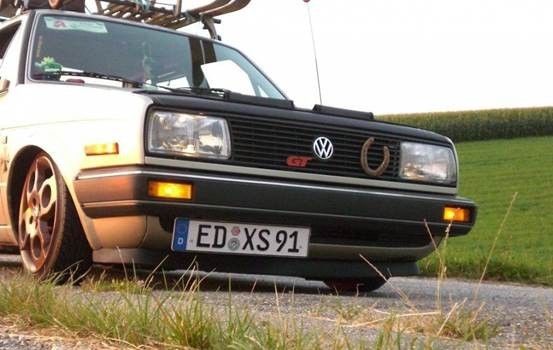
For example, family cars tend to get the maximum torque in the low speed region, and they can enjoy the power experience brought by the engine as much as possible in the case of urban driving. This kind of engine is most famous to Volkswagen. For example, the old Jetta is a typical low-speed and high-torque car. It adopts short-stroke design and accelerates sharply, but it is blind at high speed.
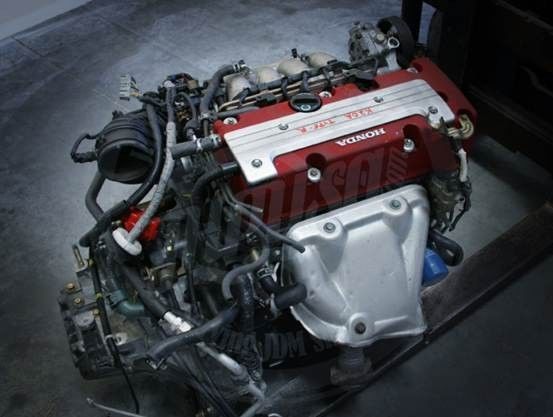
On the contrary, racing cars/sports cars tend to get the maximum torque at high speed, which can ensure the strongest power output at high speed. For example, Honda Overlord-class red-headed high-speed K20A engine will not force the maximum torque until 7000rpm.
So even if the maximum torque is the same, it is really hard to say whether it is an ordinary family car or a racing car that makes people crazy.
The following engine external characteristic curve diagram can show the relationship between engine speed, power and torque more intuitively. What is the maximum power and torque of the engine? It is extracted from this picture:
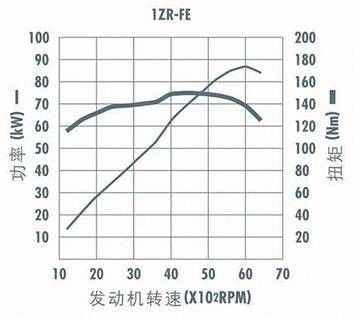
The engine external characteristic curve is very special, not only because it is measured on the brake test bench, but more importantly, it is obtained when the engine is fixed at the maximum throttle opening, so it represents the maximum dynamic performance that the engine can obtain, that is, the one indicated as 100% in the following figure:
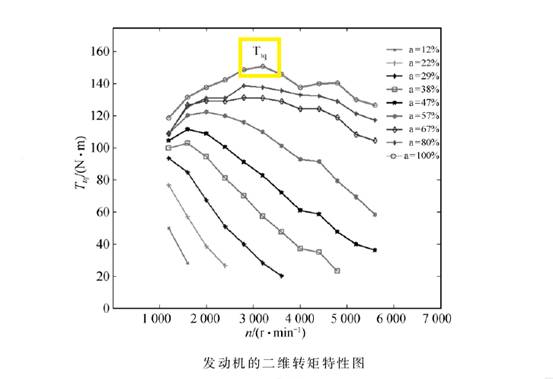
We can read the speed range corresponding to the maximum torque from the diagram, so as to understand the output characteristics of this engine and use it for us to better control this car.
Why is the maximum torque faster than the maximum power?
If we look at the graph carefully again, we can get an obvious conclusion that the maximum torque is faster than the maximum power. As for the reason, it is necessary to talk about several key related households of the maximum torque of the engine.
Usually, the maximum torque will be affected by the engine intake system, fuel supply system and ignition system. At a certain speed, the maximum torque can be generated when the energy absorption matching of these systems reaches the best.
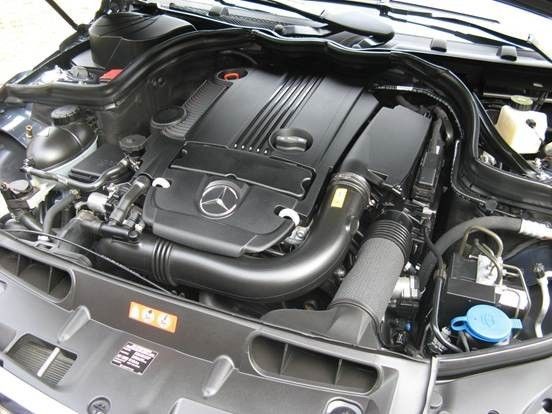
It is precisely because it is very difficult to accurately control this complex system that many electronic control technologies have been born. For example, in the classic M271DE18AL engine, Mercedes-Benz used the oil pump computer to control the fuel injection more accurately, and the running stability of the engine was excellent, and the theoretical limit was higher.
Of course, this complex system will also be affected by many physical conditions, such as the throttle opening mentioned above. We can clearly see its influence from the two-dimensional torque characteristic diagram of the engine. Here, we will give another important influence factor-intake efficiency.
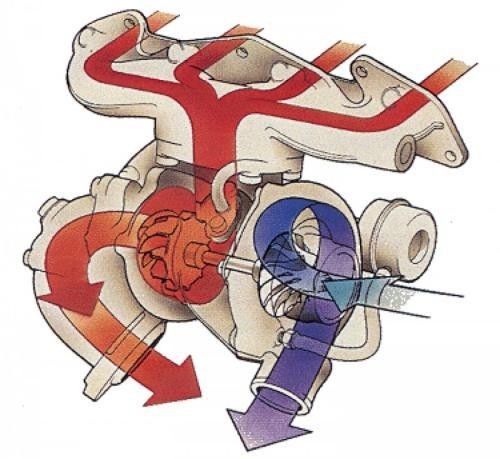
High intake efficiency means that the amount of combustible mixed gas is larger, which is just like eating hamburgers with higher calories. Although the amount is the same, we can eat more, which is reflected in the engine that it can create greater pressure in the cylinder and obtain greater torque.
It is reasonable to say that with the increase of engine speed, the gas will get a higher flow rate with the faster movement of the piston, and the more fresh gas flows in within the specified time, which means that the intake efficiency will be greater.
But things will not always be so beautiful. With the speed increasing, there will be annoying interference between intake and exhaust gas in the engine, and the fresh gas just entering will be pushed out of the cylinder by the hot exhaust gas, which will reduce the actual intake air. If fresh air can’t enter, the natural engine won’t be full, and the result of tantrums is that the torque is reduced.
Therefore, with the increase of the rotational speed, the rotational speed shows a trend of increasing first and then decreasing. Generally speaking, the maximum torque of a common family car occurs at 3000-5000rpm, and then decreases.
Below, I have sorted out the rotational speeds corresponding to the maximum torque of the top ten cars sold in the first half of the year (only natural inhalation is listed here), which can be used as a preliminary understanding.
Maximum torque of popular family car
car make and model
Maximum torque (Nm)
Maximum torque speed (rpm)
Yinglang (1.5L)
143
4000
Xuanyi (1.6L)
126
4000
Jetta (1.5L)
150
3800
Lavida (1.6L)
155
3800
Sagitar (1.6L)
155
3800
Furuisi (1.5L)
142
4500
La Lola (1.6L)
154
5200
Bora (1.6L)
155
3800
Santana (1.6L)
155
3800
Emgrand (1.5L)
140
4400
Knowing why the torque rises first and then falls, it is not too complicated to explain the power problem.
With the increase of speed, the power of the engine also increases accordingly. Although the power is not so happy after the torque starts to decrease, the power (the product of torque and speed) will continue to increase with the increase of speed.
After reaching the peak, the opening time of the intake and exhaust valves is relatively shorter, the intake and exhaust are affected, and the ignition energy is weakened. At this time, it is useless to step on the accelerator.
Improve air intake efficiency
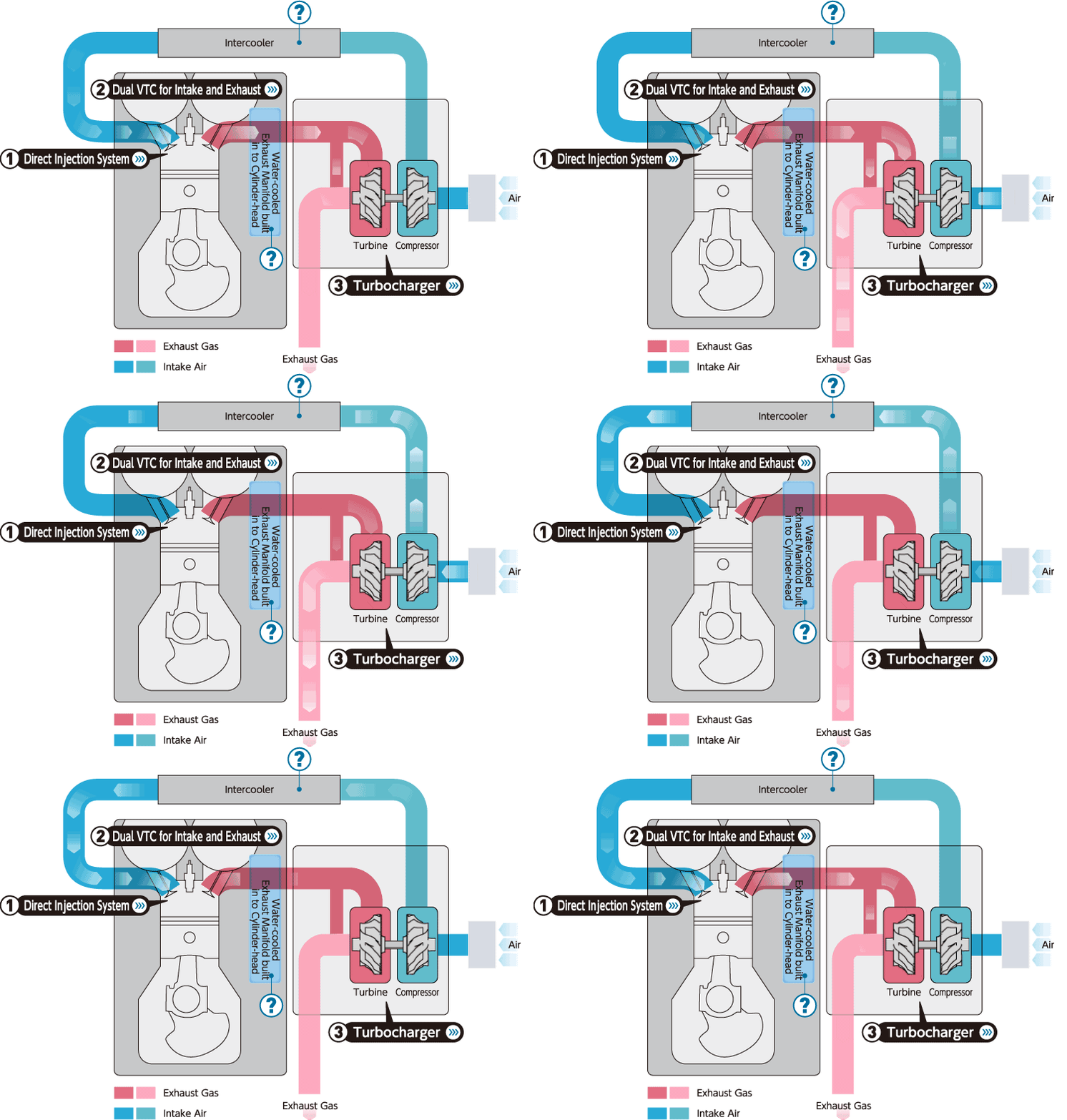
Knowing the changing trend of maximum torque and maximum power, we will find that intake efficiency is particularly important in the whole changing process. Therefore, the engine has undergone a series of improvements, among which turbocharging is the most familiar one.
Because turbocharging forces the engine to intake air, the intake efficiency is improved and the maximum torque area becomes wider. For example, the modern Kappa series 1.4T engine, which won Ward’s top ten last month, can achieve the maximum torque (210.8N·m) in the speed range of 1400-3700rpm.
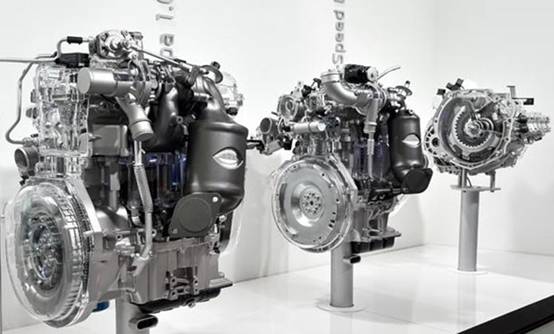
In addition, variable valve timing (VVT) is also a common technical means. By adjusting the valve lift, it can not only ensure low speed and high torque, but also obtain high speed and high power. This technology was first developed by Honda and is very mature today, such as Toyota VVT-i, Porsche Variocam and Hyundai DVVT.
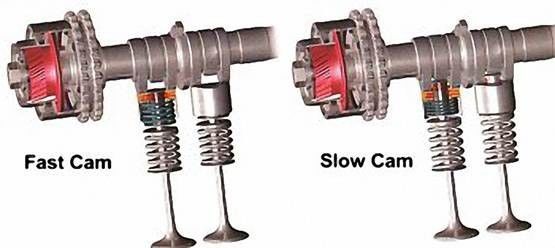
Note: Porsche Variocam
Thanks to these technologies, taking the classic BMW N20 single turbine twin scroll turbocharging as an example, we will find that the engine external characteristic curve shows the following state.
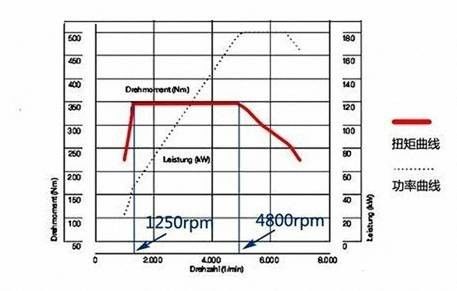
Many people think that the N20 engine of BMW is the N55 engine with two cylinders missing. After all, this engine combines single turbine and double scroll turbocharging technology, electronic valve technology and high-precision direct fuel injection technology. The N20 engine can reach the maximum torque at 1,250 rpm, and can last up to 4,800 rpm (high power version), covering the speed range used in daily driving.
There is mystery.
Among the engine parameters, there are two important parameters that are not often mentioned-torque reserve and power reserve. As the name implies, reserve means wealth, and torque reserve can bring many benefits to the engine:
1. It can stabilize the work of the engine and avoid the stall of the engine when it suddenly encounters resistance;
2. When starting at idle speed, the reaction will be faster and the speed will be stronger;
3. The stronger the ability to overcome short-term overload, the better it can adapt to the working situation with large resistance fluctuation, so that the number of gear changes during driving can be reduced and the driving experience can be enhanced.
There are three ways to change the engine torque, among which changing the ignition advance angle has the fastest response. Therefore, in the idle condition, in order to control the torque quickly, the method of setting the ignition advance angle at a certain distance from the optimal ignition advance angle is adopted. When the torque needs to be increased quickly, the engine torque can be rapidly increased by increasing the ignition angle, and this method is called torque reserve.
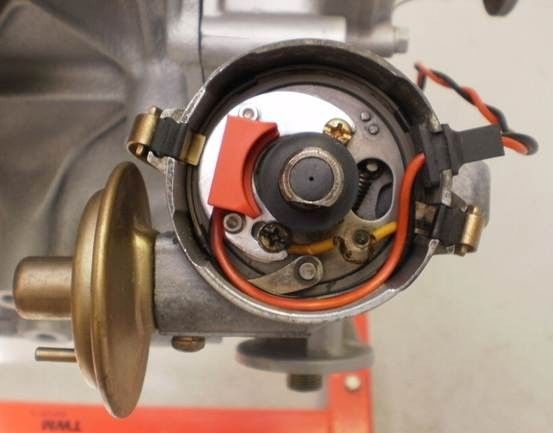
Although the torque reserve is of great benefit to the life and long-term use of the engine body. However, the reserve should not be too large, otherwise the cost performance will not be high. The torque reserve coefficient of general gasoline engines is around 1.25-1.35.
It should be noted that Uncle Sway found that many people like to directly compare the maximum torque on the external characteristic curve with the torque corresponding to the maximum power. In fact, this algorithm is incorrect, because we are talking about the calibration condition, that is, the parameters on the engine nameplate.
Taking Magotan 2.0TSI engine as an example, from the external characteristic curve, we can read that the maximum torque is about 280N·m, and the torque corresponding to the maximum power is about 255 N m. If we use 280/255=1.10, the torque reserve coefficient here is wrong.
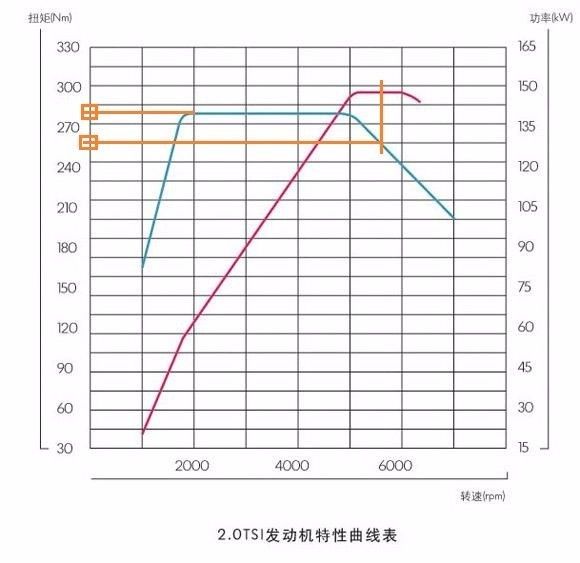
Let’s just say that although the external characteristic curve is beautiful, don’t put everything on it.
Engine power reserve
After talking about torque reserve, engine power reserve is not too difficult to understand. Sufficient engine power reserve is conducive to achieving greater gradeability and acceleration, which are very useful in both daily driving and off-road driving.
Once the engine is installed in the car, the torque reserve can’t be changed, but the power reserve of the car can be changed by equipping different transmissions, such as changing the transmission ratio of the main reducer.

We can understand it this way: when driving at a low speed on a flat and good road, the throttle opening is not the maximum. Assuming that the engine power at this time is P1, if the throttle is opened to the maximum at once, that is, the accelerator pedal is pressed to the bottom for climbing or accelerating, the maximum engine power P2 will really explode at this time, and P2-P1 is the engine power reserve. If P1 is compared to the unsheathed knife, P2 means that the knife is drawn.

In a word, the external characteristic curve diagram is gold, so you might as well ponder this diagram more, and you can still find a lot of interesting and useful little knowledge.
(source: autocarweekly)