Cctv news(Evening News): The Yangtze River is one of the rivers with the richest aquatic biodiversity in the world, and it is also an important barrier to maintain China’s ecological security. However, it was once faced with a continuous decline in biodiversity index and a severe situation of endangered rare species. In order to protect this mother river, a 10-year ban on fishing has been implemented in key waters of the Yangtze River basin since 2021. In 2023, the Yangtze River fishing ban ushered in the closing year of a three-year strong foundation. What is the effect of three years of unremitting efforts?
This is a video that has been sent to the Internet by netizens since 2023. The number of fish in the Yangtze River has increased, and even the unexpected encounter with finless porpoises in the Yangtze River has become a normal state that can happen at any time.

There is also good news from the Ministry of Agriculture and Rural Affairs. The number of finless porpoises has stopped falling and rebounded for the first time. The distribution range and visible frequency of rare species such as swordfish and squid in the Yangtze River have increased significantly, and the aquatic biological resources have recovered. The three-year fishing ban has achieved gratifying results.

At the beginning of the new year, a new phase of the Yangtze River fishing ban began.
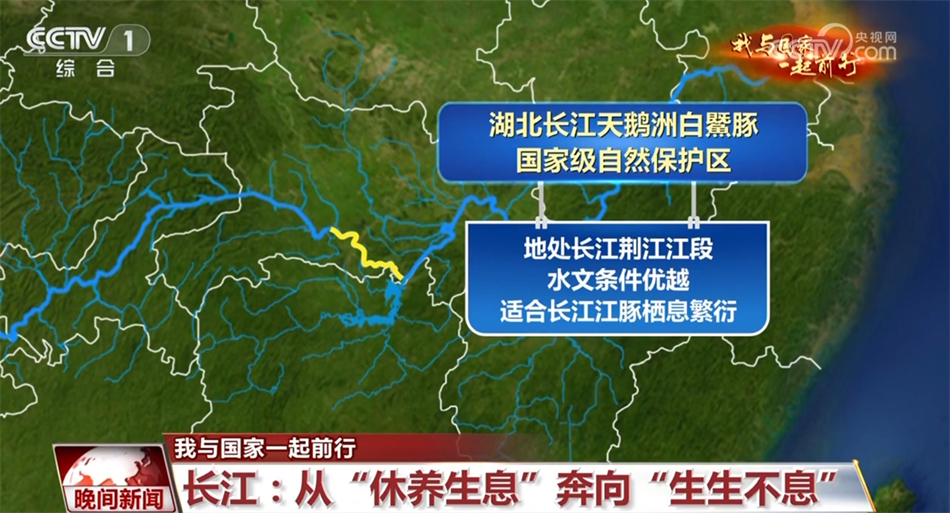
This is the Hubei Yangtze River Swan Island Baiji Dolphin National Nature Reserve located in Shishou, Hubei. In 2024, the plan to release the finless porpoise to the Yangtze River has been put on the agenda, and the staff are busy checking the activity and health of the finless porpoise for the smooth release.

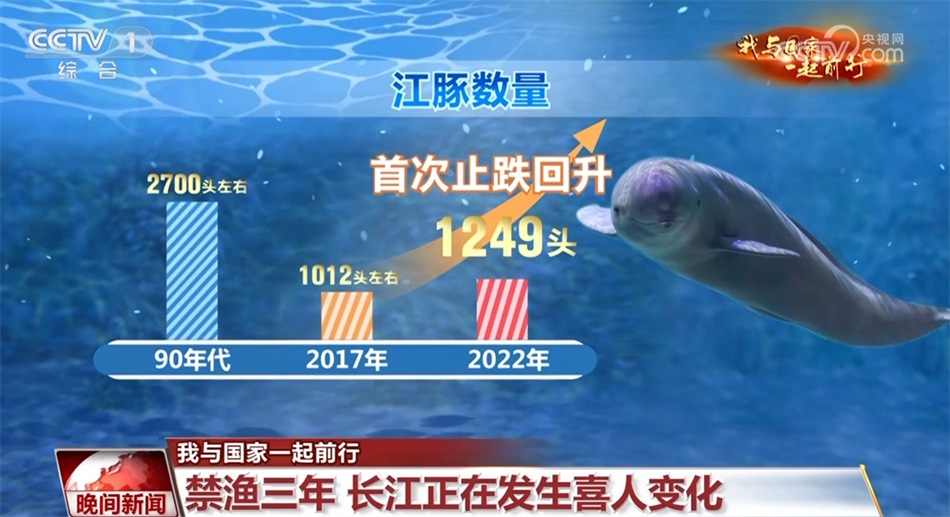
The nature reserve is located in the Jingjiang section of the Yangtze River, which is the "nine-bend ileum". It has excellent hydrological conditions and is very suitable for the Yangtze finless porpoise to inhabit and breed. More than 100 finless porpoises have lived here. As the flagship species of the Yangtze River, the number of finless porpoises directly reflects the health score of the Yangtze River ecosystem. However, since the 1990s, the number of finless porpoises has been reduced from about 2,700 to about 1,012 in 2017. It is precisely because of this that the reserve has taken on the important task of ex situ conservation of finless porpoises. For the staff here, the first job that can’t be shaken every day is patrol.
Mao Junfeng, deputy director of the management office of Hubei Yangtze River Swan Island Baiji Dolphin National Nature Reserve:Twelve patrolmen, in groups of two, walk along the nature reserve once a day. One is to ban fishing, for fear of fishing, and the other is to manage the environment to see if there is any damage.
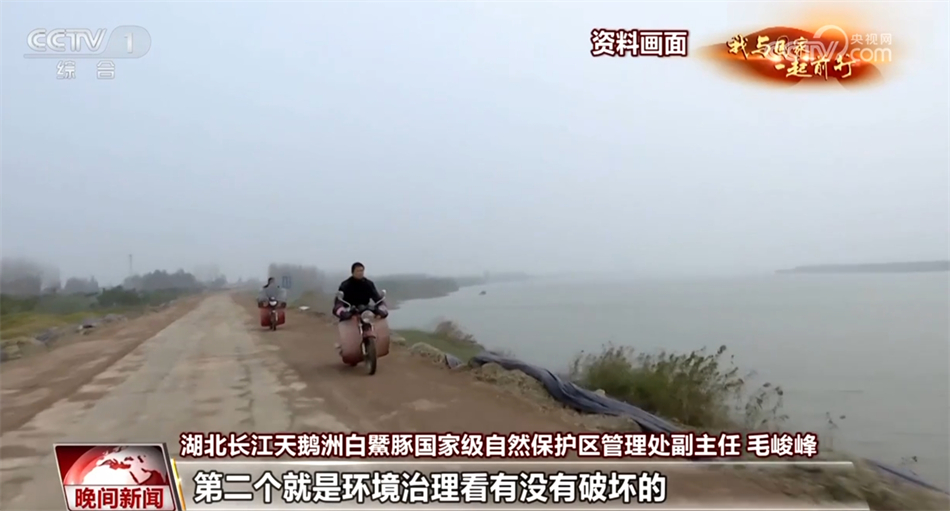
Patrol is not only carried out during the day, but also at night. No matter whether eating or sleeping, as long as abnormalities are found, the patrol staff will immediately deal with them.

Tao Le, head of Jiangbei Base of Hubei Yangtze River Swan Island Baiji Dolphin National Nature Reserve:At the peak of illegal fishing, I often go to sleep at two or three in the morning every day. The changes in the ecological environment of the reserve now also make us feel that the work we have done is very meaningful.
In addition to patrol, it is also an important link to repair the ecological resources of the old road of Swan Island and the main stream of the Yangtze River. Planting emergent plants such as Xiang Lian and reed, planting submerged plants such as black algae, wormwood and Myriophyllum, and building artificial fish nests can not only provide food for migratory birds, but also provide a better habitat for fish.

Tao Le, head of Jiangbei Base of Hubei Yangtze River Swan Island Baiji Dolphin National Nature Reserve:This is a reed, which was planted this year (2023). When the water level continues to rise (in summer), this beach will be covered by the water level, and fish will lay eggs, which will attach to the roots of these plants and promote the great cycle of biology.

Mao Junfeng, deputy director of the management office of Hubei Yangtze River Swan Island Baiji Dolphin National Nature Reserve:Through restoration, the living environment around the finless porpoise is better. More fish grass, more fish; There are more small fish and more birds. For example, in winter, there are more than 20,000 birds at the most, and there are many birds and fish, and finally a biodiversity living environment is achieved.

And it is the coordinated promotion from the state to the provinces and cities along the Yangtze River in the past three years. On March 1, 2021, the People’s Republic of China (PRC) Yangtze River Protection Law came into effect. As the first special river basin law in China, it puts forward higher requirements for biological protection, sewage treatment, flood control and disaster relief, and ecological restoration of the Yangtze River.

In the provinces and cities along the Yangtze River, the restoration of the ecological environment of the Yangtze River is in an overwhelming position. Sichuan, Guizhou and Yunnan provinces have established a horizontal ecological compensation mechanism in the basin to jointly protect the ecology of the upper reaches of the Yangtze River; Wuhan, Hubei Province will promote the ecological management of the Yangtze River in depth, block urban sewage from flowing into the Yangtze River and protect the middle reaches; In the downstream, the three provinces and one city in the Yangtze River Delta have coordinated governance and joint prevention and control. At the same time, the provinces and cities along the Yangtze River also replenish fish resources through proliferation and release to the Yangtze River every year, so the rare fish endemic to the Yangtze River are increasing. This kind of common governance has quietly changed the ecological environment of the Yangtze River Economic Belt.

In 2023, experts from the Institute of Hydrobiology, Chinese Academy of Sciences came to Tianezhou Baibo Dolphin Reserve and made a detailed survey of fishery resources in the Yangtze River waters near the reserve.
Hao Yujiang, Associate Research Fellow, Institute of Hydrobiology, Chinese Academy of Sciences:It is found that the number of fish is very large, the community structure is also very healthy and complete, and the biomass is also very large from small fish to large fish to predatory fish. In addition, from the point of view of water environment and water quality, it is obviously improved compared with the original.
All these efforts by the reserve and experts are actually preparing for an important action.
In April, 2023, four finless porpoises were released to the Yangtze River after nearly two years of wild training in the nature reserve, which was the first time for China to protect the finless porpoises ex situ.
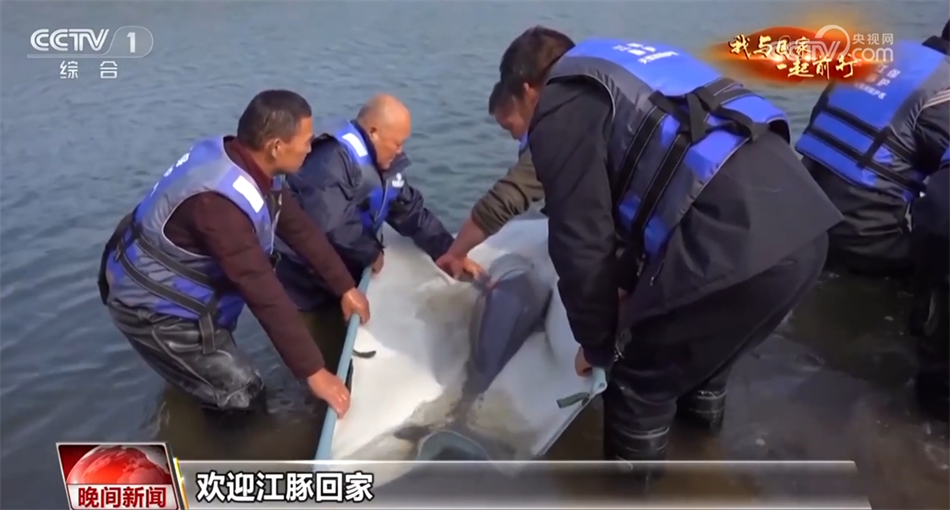
Hu Lianghui, Director of the Management Office of Swan Island Baiji Dolphin National Nature Reserve in Hubei Yangtze River:The environment of the Yangtze River has been getting better and better, and now it is very suitable for the life of finless porpoises. After this success, we will release the finless porpoise into the Yangtze River every year or regularly.

At the moment when the finless porpoise jumped into the Yangtze River, everyone felt quite sad.
Tao Le, head of Jiangbei Base of Hubei Yangtze River Swan Island Baiji Dolphin National Nature Reserve:(Previously) we were running around it every day, and the chances of seeing it again in the future are very few, but the purpose of protecting the finless porpoise is also to enable it to finally return to the Yangtze River.
Hao Yujiang, Associate Research Fellow, Institute of Hydrobiology, Chinese Academy of Sciences:If the finless porpoise can be released naturally from the Yangtze River and its population can be restored naturally, it shows that our great protection of the Yangtze River is gradually showing better results, and the vitality of the mother river of the Yangtze River is once again glowing.
The release and merger is not the end, and everyone is still paying attention to the living conditions of four finless porpoises.
Hao Yujiang, Associate Research Fellow, Institute of Hydrobiology, Chinese Academy of Sciences:Judging from the situation we have at present, we think that several finless porpoises should have adapted to the environment of the Yangtze River, and they may have merged with the natural population of the Yangtze River to form a larger natural population, which really makes us more excited.

After three years of protection and restoration, the Yangtze River is undergoing gratifying changes. In 2022, the latest scientific research of the Yangtze finless porpoise showed that the population of the Yangtze finless porpoise was 1,249, which achieved the first rebound since the monitoring data was available in 2006.
It’s not just the return of the finless porpoise that is exciting. In October 2023, the communiqué jointly issued by the Ministry of Agriculture and Rural Affairs, the Ministry of Ecology and Environment, and the Ministry of Transport showed that the recovery of resources such as herring, grass carp, silver carp, bighead carp and Coilia ectenes was very obvious. The latest monitored fish species reached 193, an increase of 25 species compared with that before the fishing ban in 2020. The biological integrity index of the main stream of the Yangtze River, Poyang Lake and Dongting Lake increased by two grades compared with the beginning of the index system in 2018.
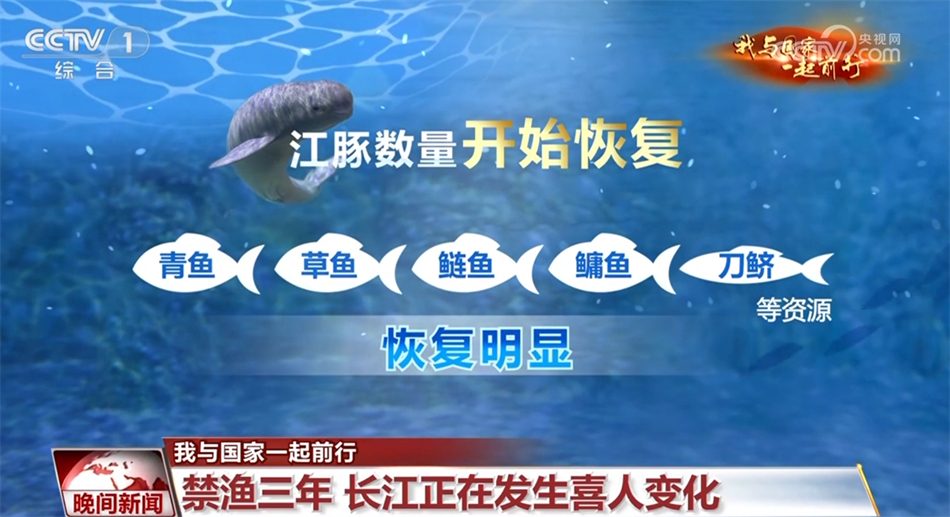
Liu Huanzhang, a researcher at the Institute of Hydrobiology, Chinese Academy of Sciences:Before the fishing ban, fish were mainly small individuals, but after the fishing ban, the average body length and weight increased significantly. Its density and total resources are increasing. If it is protected like this, some rare species should have a very good hope of recovery.

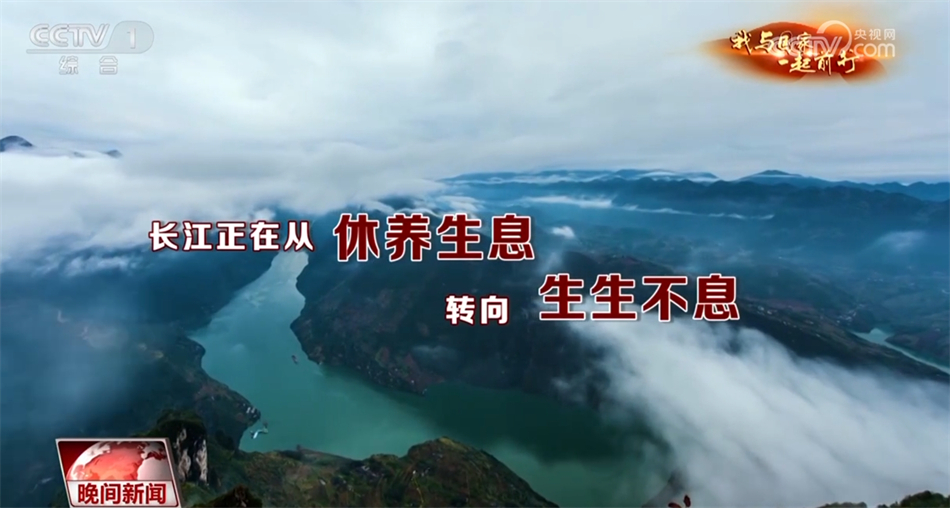
The ten-year ban on fishing is only one of the steps to protect the ecology of the Yangtze River. With the simultaneous promotion of the great protection of the Yangtze River, the water quality of the Yangtze River is also improving. From 2021 to 2023, the water quality of the main stream of the Yangtze River has been stable at Class II. From "fishing" to "protecting fishing", the fishermen who have retired from fishing have been converted into China Fishery Bureau Yangtze River patrolmen, and the public’s awareness of protecting the Yangtze River is increasing. Our mother river, the Yangtze River, is changing from "recuperation" to "endless life".
[CCTV short comment] March forward with the country towards dreams
It is a great plan for the future generations of Fuze to change the vitality of the Yangtze River with the courage to ban fishing for ten years. The realization of any dream will not happen overnight, and it will inevitably encounter setbacks and difficulties. The key is to have the spirit of not being afraid of difficulties and suffering. Since the beginning of the year, the special program "I March with the country" tells the story of many ordinary people’s struggles. They are engaged in different jobs, but they all have such a spirit. From their growth, we see an enterprising China. From their stories, we can feel that every step of the country is that countless ordinary people like you and me are running for their dreams. Running along the road with the country, ordinary people can also make great contributions to their home and country. In the new year, I hope you and I will continue to believe in the power of struggle, move towards our dreams and move forward with our country.